Coconut Curry Salmon
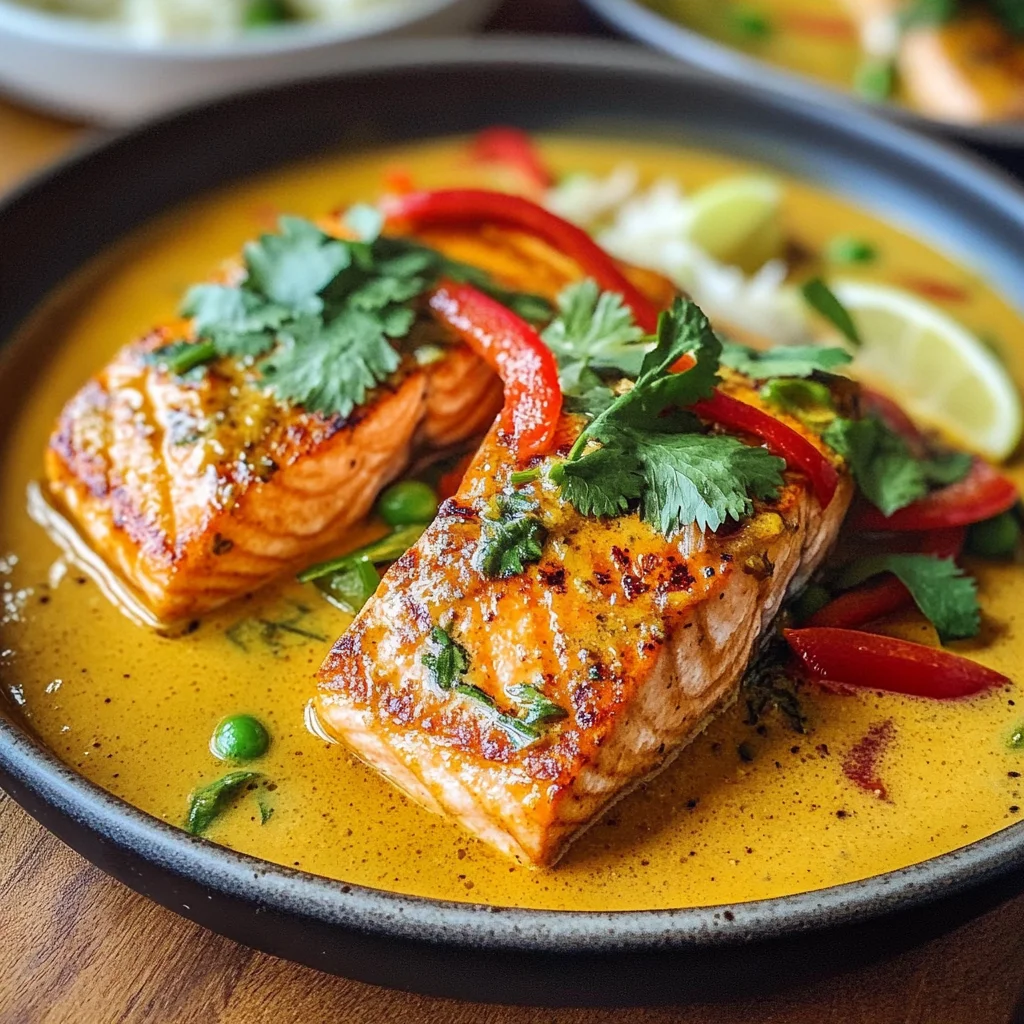
A delicious and easy dinner awaits with this Coconut Curry Salmon recipe! This dish combines the rich, creamy flavor of coconut milk with tender salmon fillets. Perfect for weeknight meals or special occasions, this coconut curry is not only packed with bold spices but also offers a delightful taste that will impress your family and friends.
Why You’ll Love This Recipe
- Quick and Easy: This recipe can be prepared in just 35 minutes, making it perfect for busy weeknights.
- Flavor Packed: The fragrant blend of spices and coconut milk creates an irresistible flavor profile that you won’t forget.
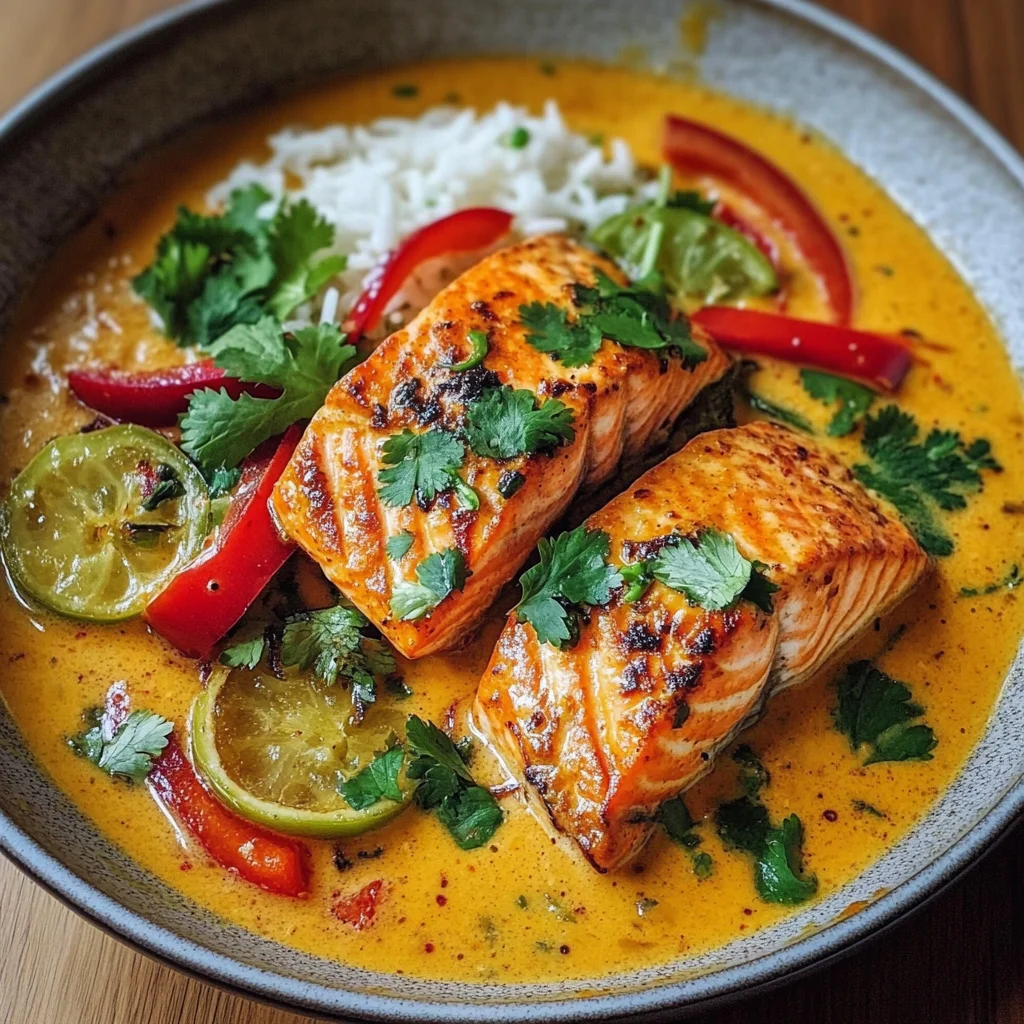
- Versatile Dish: Serve it over rice or alongside vegetables for a complete meal that suits any palate.
- Healthy Ingredients: Rich in omega-3 fatty acids from salmon and wholesome veggies, this dish promotes a healthy lifestyle.
- Gorgeous Presentation: The vibrant colors of the red bell pepper and fresh cilantro make this dish visually stunning.
Tools and Preparation
To create your Coconut Curry Salmon, having the right tools makes all the difference. Here’s what you’ll need:
Essential Tools and Equipment
- Large skillet
- Cutting board
- Knife
- Measuring spoons
- Spatula
Importance of Each Tool
- Large skillet: A spacious skillet allows for even cooking and prevents overcrowding of ingredients.
- Knife: A sharp knife makes chopping onions, garlic, and other vegetables quick and safe.
- Measuring spoons: Accurate measurements ensure that your flavors are balanced just right.
Ingredients
For the Salmon
- 4 salmon fillets (about 6 oz each)
- Salt and pepper, to taste
For the Curry Sauce
- 1 tablespoon coconut oil
- 1 small onion, finely chopped
- 2 cloves garlic, minced
- 1 tablespoon fresh ginger, grated
- 2 tablespoons red curry paste
- 1 can (14 oz) coconut milk
- 1 tablespoon fish sauce
- 1 teaspoon brown sugar
For Serving
- 1 red bell pepper, sliced
- Fresh cilantro and lime wedges for garnish
How to Make Coconut Curry Salmon
Step 1: Prepare the Salmon
Pat salmon fillets dry with paper towels. Season both sides of the fillets with salt and pepper to enhance their natural flavors.
Step 2: Sauté Aromatics
In a large skillet over medium heat, heat coconut oil. Add chopped onion and sauté for 2–3 minutes until softened.
Step 3: Add Garlic and Ginger
Add minced garlic and grated ginger to the skillet. Cook for about 1 minute until fragrant. Then stir in red curry paste and cook for another minute.
Step 4: Create the Curry Base
Pour in coconut milk along with fish sauce and brown sugar. Stir to combine all ingredients thoroughly; bring to a gentle simmer.
Step 5: Cook Salmon
Carefully add salmon fillets along with sliced bell pepper into the skillet. Cover the skillet with a lid and allow it to simmer for 12–15 minutes or until salmon is cooked through.
Step 6: Garnish and Serve
Once cooked, garnish your Coconut Curry Salmon with fresh cilantro. Serve hot alongside lime wedges for an extra burst of flavor. Enjoy!
How to Serve Coconut Curry Salmon
Coconut Curry Salmon is a versatile dish that pairs well with various sides and garnishes. Here are some delightful serving suggestions to elevate your meal.
With Steamed Rice
- Serve the salmon over a bed of fluffy steamed jasmine or basmati rice. The rice soaks up the creamy curry sauce, enhancing the dish’s flavor.
With Quinoa
- For a nutritious twist, try serving Coconut Curry Salmon over cooked quinoa. Its nutty flavor complements the curry beautifully while adding extra protein.
With Fresh Salad
- A light, crisp salad made with mixed greens, cucumber, and cherry tomatoes adds freshness to the rich salmon dish. Drizzle with a simple vinaigrette for added zing.
With Lime Wedges
- Garnish each plate with lime wedges. Squeezing fresh lime juice over the curry enhances its brightness and balances the flavors perfectly.
With Naan Bread
- Pair this dish with warm naan bread for dipping. The soft bread is perfect for soaking up the flavorful coconut curry sauce.
How to Perfect Coconut Curry Salmon
To make your Coconut Curry Salmon even better, consider these helpful tips.
- Use fresh ingredients: Opt for fresh garlic, ginger, and bell peppers for maximum flavor and aroma in your curry.
- Adjust spice levels: If you prefer more heat, add additional red curry paste or fresh chopped chili peppers to suit your taste.
- Cook salmon carefully: Monitor the cooking time to prevent overcooking the salmon. It should flake easily when done but still be moist.
- Experiment with vegetables: Feel free to add other vegetables like broccoli or snap peas to enhance nutrition and color in your dish.
- Let it simmer: Allowing the coconut milk to simmer gently helps develop deeper flavors without boiling away the creaminess.
- Store leftovers properly: Keep any leftovers in an airtight container in the fridge for up to 2 days; reheat gently on low heat.
Best Side Dishes for Coconut Curry Salmon
Coconut Curry Salmon pairs beautifully with a variety of side dishes. Here are some great options to consider:
- Steamed Broccoli: Lightly steamed broccoli adds vibrant color and nutrients without overpowering the main dish.
- Coconut Rice: Cook rice with coconut milk for a sweet and creamy side that complements the flavors of the curry.
- Roasted Vegetables: A medley of roasted seasonal vegetables provides a hearty contrast and enhances your meal’s variety.
- Cucumber Raita: A cooling yogurt-based dip made with diced cucumber and spices can balance out the spiciness of the curry.
- Mango Salsa: Fresh mango salsa brings sweetness and acidity, making it a refreshing topping over salmon.
- Garlic Noodles: These simple noodles tossed in garlic butter offer a delightful chewy texture alongside your salmon.
- Cauliflower Rice: For a low-carb option, serve with cauliflower rice seasoned lightly to absorb some of that delicious curry sauce.
- Grilled Asparagus: Tender grilled asparagus adds an elegant touch while providing a crunchy element to your meal.
Common Mistakes to Avoid
Avoiding common pitfalls can enhance your Coconut Curry Salmon experience. Here are mistakes to look out for:
- Not seasoning the salmon: Failing to season the salmon properly can lead to bland flavors. Always sprinkle salt and pepper on both sides before cooking.
- Cooking too quickly: Rushing the cooking process may result in unevenly cooked salmon. Allow the fillets to simmer gently for even heat distribution.
- Ignoring ingredient freshness: Using stale or old ingredients, like spices or coconut milk, affects flavor. Make sure all ingredients are fresh for best results.
- Overcooking the salmon: Overcooking can make the fish dry and tough. Keep a close eye on cooking times and remove when just cooked through.
- Not using enough curry paste: Skimping on red curry paste can lead to a less flavorful dish. Use the recommended amount for a rich, aromatic flavor.
Storage & Reheating Instructions
Refrigerator Storage
- Store in an airtight container.
- Keep in the fridge for up to 3 days.
Freezing Coconut Curry Salmon
- Place in a freezer-safe container or bag.
- Can be frozen for up to 2 months.
Reheating Coconut Curry Salmon
- Oven: Preheat oven to 350°F (175°C). Place in a covered dish and heat for about 15-20 minutes until warmed through.
- Microwave: Heat on medium power in short intervals of 1-2 minutes, checking frequently to avoid overheating.
- Stovetop: Gently warm in a skillet over low heat, stirring occasionally until heated through.
Frequently Asked Questions
Here are some common questions about preparing Coconut Curry Salmon.
What can I serve with Coconut Curry Salmon?
Coconut Curry Salmon pairs wonderfully with jasmine rice, quinoa, or steamed vegetables for a balanced meal.
Can I use other fish instead of salmon?
Yes! This recipe works well with other fish like trout or tilapia. Just adjust cooking time based on thickness.
How spicy is Coconut Curry Salmon?
The spice level depends on the amount of red curry paste used. Feel free to start with less and add more as per your taste preference.
Is Coconut Curry Salmon gluten-free?
Absolutely! All ingredients in this recipe are gluten-free, making it suitable for those avoiding gluten.
Final Thoughts
Coconut Curry Salmon is not only delicious but also versatile. You can easily customize it by adding more vegetables or adjusting spice levels to suit your taste. Give this recipe a try; your dinner table will love it!
Coconut Curry Salmon
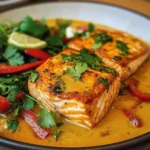
Coconut Curry Salmon is a delightful and effortlessly simple dish that combines the lusciousness of coconut milk with tender salmon fillets. This flavorful recipe, ready in just 35 minutes, is perfect for weeknight dinners or special occasions. The fragrant red curry paste mingles harmoniously with aromatic garlic and ginger, creating an unforgettable taste experience. Serve it over fluffy rice or alongside vibrant vegetables for a complete meal that’s both satisfying and healthy. With its stunning presentation and bold flavors, Coconut Curry Salmon will surely impress family and friends alike.
- Prep Time: 10 minutes
- Cook Time: 25 minutes
- Total Time: 35 minutes
- Yield: Serves 4
- Category: Main
- Method: Sautéing
- Cuisine: Asian
Ingredients
- 4 salmon fillets (about 6 oz each)
- 1 tablespoon coconut oil
- 1 small onion, finely chopped
- 2 cloves garlic, minced
- 1 tablespoon fresh ginger, grated
- 2 tablespoons red curry paste
- 1 can (14 oz) coconut milk
- Salt and pepper, to taste
- 1 red bell pepper, sliced
Instructions
- Pat the salmon fillets dry with paper towels. Season both sides with salt and pepper.
- In a large skillet over medium heat, melt coconut oil and sauté the chopped onion for 2–3 minutes until softened.
- Add minced garlic and grated ginger; cook for about 1 minute until fragrant. Stir in red curry paste and cook for another minute.
- Pour in the coconut milk, stir well, then add the fish sauce and brown sugar. Bring to a gentle simmer.
- Carefully add salmon fillets and sliced bell pepper to the skillet. Cover with a lid and simmer for 12–15 minutes until the salmon is cooked through.
- Garnish with fresh cilantro before serving with lime wedges.
Nutrition
- Serving Size: 1 salmon fillet (170g)
- Calories: 380
- Sugar: 5g
- Sodium: 600mg
- Fat: 25g
- Saturated Fat: 16g
- Unsaturated Fat: 9g
- Trans Fat: 0g
- Carbohydrates: 10g
- Fiber: 2g
- Protein: 30g
- Cholesterol: 90mg