Orange Marmalade
This easy Orange Marmalade recipe is a delightful way to use fresh oranges, creating a sweet and tangy spread that’s perfect for any occasion. With just four simple ingredients, you can whip up this delicious marmalade that elevates toast, pairs wonderfully with chicken or beef chops, and adds a burst of flavor to yogurt or overnight oats. Its versatility makes it a must-have in your kitchen!
Why You’ll Love This Recipe
- Simple Ingredients: This recipe requires only four common ingredients, making it easy to prepare at home.
- Versatile Use: Enjoy it on breakfast toast, as a glaze for meats, or even stirred into desserts.
- No Special Equipment: You won’t need any fancy gadgets; just a food processor and saucepan will do!
- Quick Preparation: With a total time of just 45 minutes, you can have homemade marmalade ready in no time.
- Great Gift Idea: Jars of this orange marmalade make thoughtful gifts for friends and family.
Tools and Preparation
Before diving into the cooking process, gather your tools. Having everything ready will make the task smooth and enjoyable.
Essential Tools and Equipment
- Food processor
- Large saucepan
- Measuring cups
- Jars or containers with lids
Importance of Each Tool
- Food processor: This tool helps chop the oranges quickly, ensuring that the rind is finely minced for that perfect texture.
- Large saucepan: Essential for cooking the mixture evenly without spilling over.
- Measuring cups: Accurate measurements are crucial for achieving the right balance of sweetness and consistency in your marmalade.
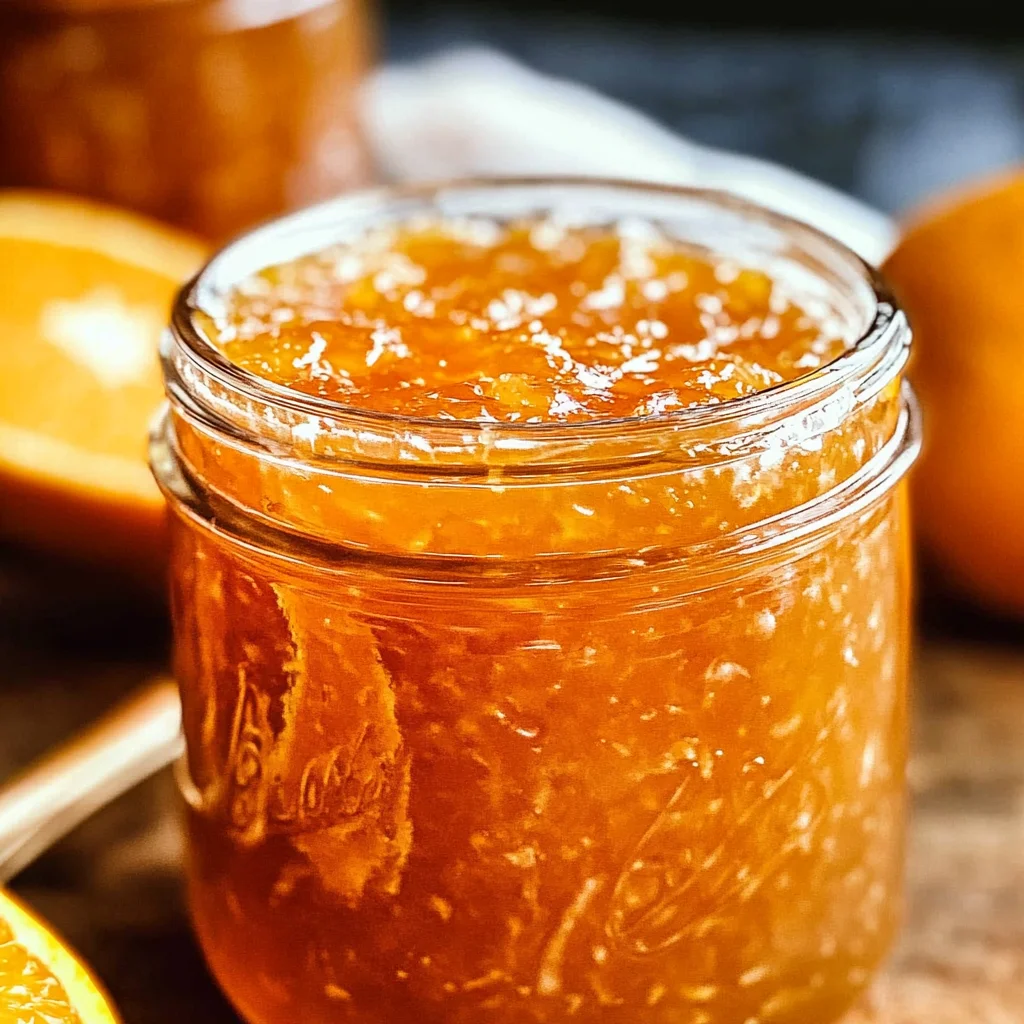
Ingredients
This easy Orange Marmalade recipe is made with just four ingredients, no special equipment, and is absolutely delicious! Enjoy it slathered on toast, beef chops, chicken, or stirred into yogurt or overnight oats!
For the Marmalade
- 2.0 to 2.3 pounds oranges (about 4 medium)
- 1 lemon, zest and juice of
- 1/3 cup water
- 4 cups granulated sugar
How to Make Orange Marmalade
Step 1: Prep Fruit
Wash the oranges and lemon thoroughly, scrubbing their peels under running water.
Step 2: Chop
Cut off the ends of the oranges. Halve each orange and cut each half into four pieces. Discard any seeds.
Step 3: Puree
Place the orange pieces in a food processor. Pulse until the rind is in very small pieces. Put a plate in the freezer to test for doneness later.
Step 4: Combine in Saucepan
Transfer the pureed oranges to a large saucepan over medium heat. Zest the lemon into the pot and squeeze its juice as well. Add water and granulated sugar; stir well to combine.
Step 5: Cook
Bring the mixture to a boil. Then reduce heat to a low boil, simmering while stirring often for about 30-35 minutes until thickened. The marmalade should slide off a spoon in sheets rather than droplets. To test doneness, pour a spoonful onto a cold plate; it should have a soft gel consistency that moves slightly when tilted.
Step 6: Pour into Jars
Once ready, pour the hot marmalade into jars or containers with lids. Allow them to cool at room temperature before storing them in the refrigerator for up to two weeks or freezing them for up to three months.
How to Serve Orange Marmalade
Orange Marmalade is a versatile condiment that can enhance many dishes. Whether you prefer it on breakfast items or in savory recipes, here are some delicious serving suggestions.
Spread on Toast
- Toasted bread – Slather orange marmalade on warm toast for a sweet and tangy breakfast treat.
- Croissants – Pair with flaky croissants for a delightful pastry experience.
Use as a Glaze
- Chicken – Brush orange marmalade on grilled chicken for a sweet and sticky finish.
- Beef chops – Use it as a glaze while cooking beef chops to add depth of flavor.
Mix into Yogurt
- Plain yogurt – Stir in orange marmalade for a refreshing breakfast or snack.
- Greek yogurt – Combine it with Greek yogurt for added creaminess and flavor.
Add to Overnight Oats
- Rolled oats – Mix orange marmalade into your overnight oats for a fruity twist.
- Toppings – Drizzle some on top before serving for extra sweetness.
How to Perfect Orange Marmalade
Creating the perfect Orange Marmalade involves attention to detail and technique. Here are some tips to ensure your marmalade turns out just right.
- Choose the right oranges: Select fresh, ripe oranges that are firm and fragrant for the best flavor.
- Test doneness properly: Use the cold plate method; if it thickens to a gel-like consistency, it’s ready.
- Stir often: Keep stirring the mixture while cooking to prevent it from sticking and burning at the bottom.
- Adjust sweetness: If desired, reduce sugar slightly for less sweetness while still achieving proper consistency.
- Cool completely before storing: Allow the marmalade to cool fully before transferring it into jars to avoid condensation.
Best Side Dishes for Orange Marmalade
Pairing side dishes with orange marmalade can elevate your meal. Here’s a list of tasty options that complement its bright flavor.
- Roasted Vegetables – Toss seasonal vegetables in olive oil and roast until caramelized; serve with a dollop of orange marmalade.
- Rice Pilaf – Flavor rice pilaf with herbs and stir in orange marmalade just before serving for an aromatic dish.
- Mashed Sweet Potatoes – Mix in a spoonful of orange marmalade to enhance the natural sweetness of mashed sweet potatoes.
- Grilled Asparagus – Drizzle grilled asparagus with orange marmalade for a zesty contrast to its earthy flavor.
- Quinoa Salad – Add orange marmalade dressing to quinoa salad for an unexpected burst of citrus flavor.
- Spinach Salad – Create a vibrant spinach salad topped with sliced oranges, nuts, and drizzled with orange marmalade vinaigrette.
Common Mistakes to Avoid
Making Orange Marmalade is simple, but a few common mistakes can hinder your results.
- Bold phrase: Not washing the fruit – Always wash your oranges and lemon thoroughly. This removes any wax or pesticides that could affect the flavor.
- Bold phrase: Overcooking the mixture – Keep an eye on your marmalade as it cooks. If it’s cooked too long, it can become too thick. Test for doneness with a cold plate.
- Bold phrase: Skipping the freezing plate test – Forgetting to use a cold plate to check consistency can lead to runny marmalade. Always freeze a plate for this important step.
- Bold phrase: Using low-quality sugar – Opt for granulated sugar to ensure proper sweetness and texture. Low-quality sugar may not dissolve well, affecting the final product.
- Bold phrase: Ignoring storage guidelines – Improper storage can lead to spoilage. Make sure to store in clean jars and refrigerate promptly after cooling.
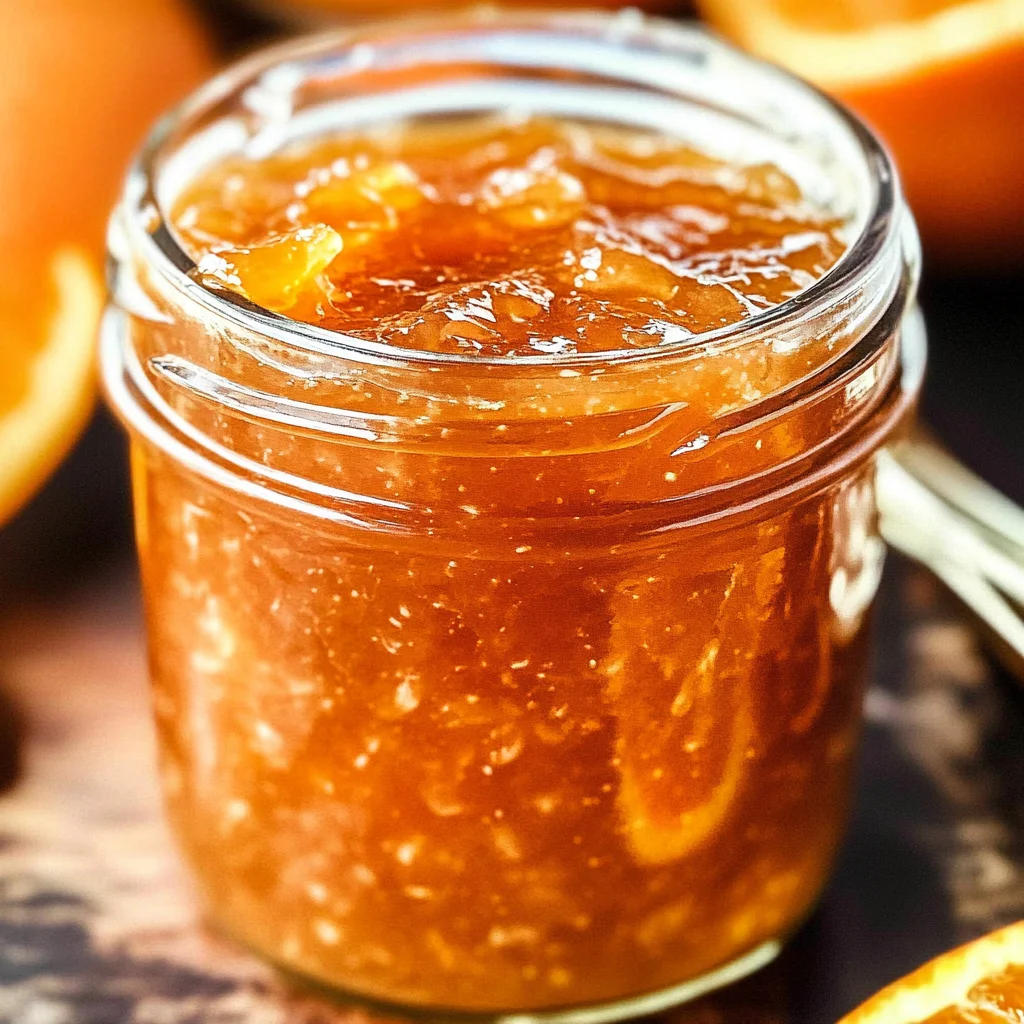
Storage & Reheating Instructions
Refrigerator Storage
- Store your orange marmalade in clean, airtight jars.
- It will last up to 2 weeks in the refrigerator.
- Ensure it cools completely before sealing jars.
Freezing Orange Marmalade
- For longer storage, freeze in freezer-safe containers or jars.
- It can be kept frozen for up to 3 months.
- Leave some space at the top of jars for expansion when freezing.
Reheating Orange Marmalade
- Bold phrase: Oven – Preheat your oven to a low temperature and place the jar in a water bath until warmed through.
- Bold phrase: Microwave – Transfer marmalade to a microwave-safe bowl and heat in short bursts, stirring frequently until warm.
- Bold phrase: Stovetop – Gently reheat on low heat in a saucepan, stirring occasionally until warmed through.
Frequently Asked Questions
Here are some common questions about making Orange Marmalade.
Can I use other fruits for marmalade?
Yes, you can experiment with other citrus fruits like lemons or grapefruits. Just adjust the sugar according to their sweetness.
How do I know when my Orange Marmalade is done?
The key test is the cold plate method. When spooned onto a cold plate, it should hold its shape without running excessively.
What should I serve with Orange Marmalade?
Orange Marmalade pairs wonderfully with toast, pancakes, yogurt, or as a glaze on chicken or beef dishes for extra flavor.
Can I make Orange Marmalade without pectin?
Absolutely! This recipe does not require added pectin because citrus naturally contains enough to gel properly when cooked down with sugar.
How long does homemade Orange Marmalade last?
In the refrigerator, it lasts up to 2 weeks; if frozen properly, it can be stored for up to 3 months without losing quality.
Final Thoughts
This easy Orange Marmalade recipe is not only delicious but also versatile. Enjoy it on toast or as a flavorful glaze for meats. You can customize it by adding spices like ginger or cinnamon for an extra twist. Give this homemade treat a try!
Orange Marmalade

Indulge in the bright, zesty flavor of homemade Orange Marmalade, a delightful spread that elevates your breakfast and culinary creations. This easy recipe requires just four simple ingredients, making it accessible for any home cook. The sweet and tangy marmalade is perfect on toast, as a glaze for grilled chicken or beef, or even swirled into yogurt for a refreshing snack. In just 45 minutes, you can create jars of this vibrant preserve that not only adds flavor to your meals but also makes thoughtful gifts for friends and family.
- Prep Time: 10 minutes
- Cook Time: 35 minutes
- Total Time: 45 minutes
- Yield: About 20 servings 1x
- Category: Condiment
- Method: Cooking
- Cuisine: American
Ingredients
- 2.0 to 2.3 pounds oranges (about 4 medium)
- 1 lemon (zest and juice)
- 1/3 cup water
- 4 cups granulated sugar
Instructions
- Thoroughly wash the oranges and lemon under running water.
- Cut off the ends of the oranges and halve each orange, then cut into smaller pieces while discarding any seeds.
- Puree the orange pieces in a food processor until finely minced.
- Transfer the puree to a large saucepan; add lemon zest and juice, water, and sugar, stirring well.
- Bring to a boil over medium heat, then reduce to a low boil for about 30-35 minutes until thickened.
- To check doneness, use the cold plate method: pour a spoonful onto a frozen plate; it should hold its shape slightly.
- Pour the hot marmalade into clean jars or containers with lids; allow to cool before refrigerating or freezing.
Nutrition
- Serving Size: 1 serving
- Calories: 48
- Sugar: 12g
- Sodium: 0mg
- Fat: 0g
- Saturated Fat: 0g
- Unsaturated Fat: 0g
- Trans Fat: 0g
- Carbohydrates: 12g
- Fiber: 0g
- Protein: <1g
- Cholesterol: 0mg